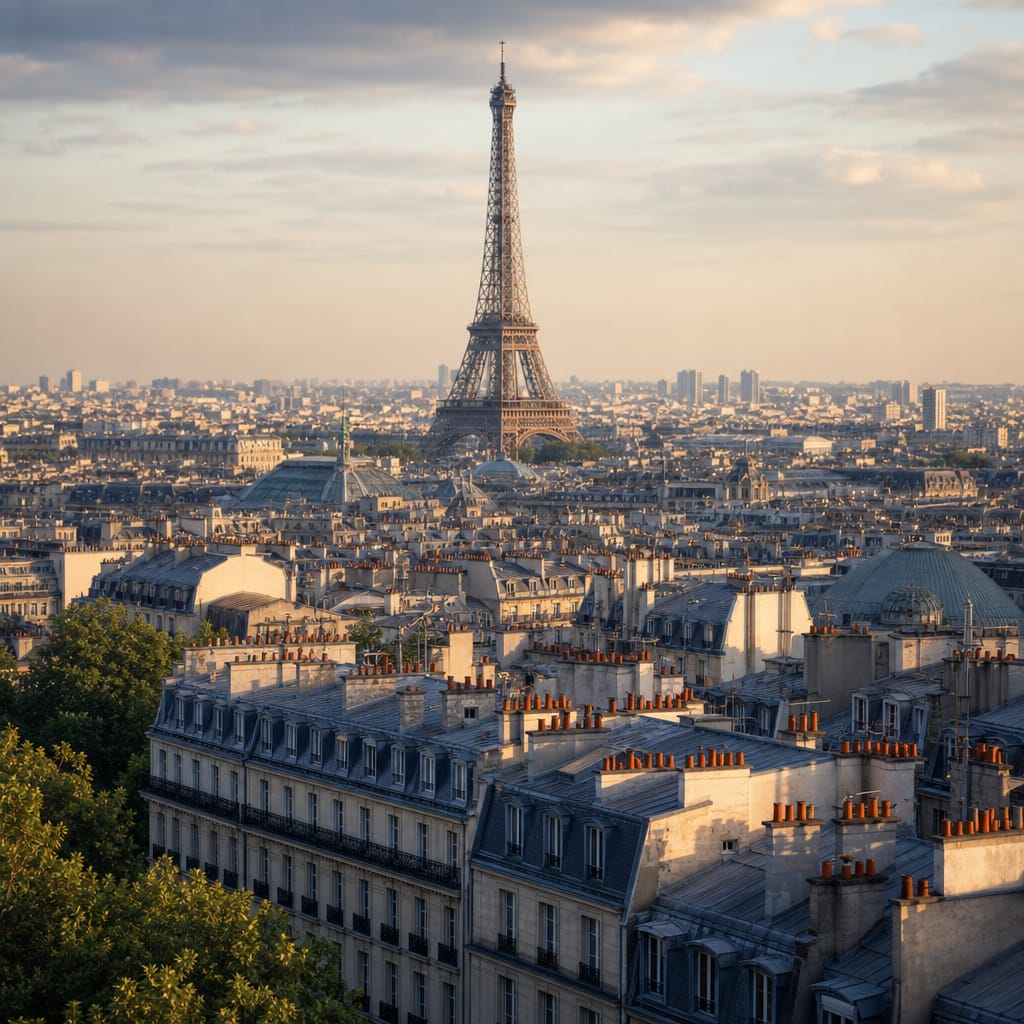

Paris doesn't just make Paris expensive. It makes everything around it expensive, in a rough circle spreading outward, thinning as it goes, like heat from a radiator. The further out you get, the more the prices cool. Most people already sense this vaguely – which is why Bruges gets name-dropped every time someone mentions Amsterdam, and why the internet reliably produces a listicle called something like "10 Cheaper Alternatives to Barcelona." What nobody explains is why this keeps working. Not just the happy accident, but the actual mechanism.
Hotspots Run Their Own Inflation
Tourist hotspots run on something very like their own private inflation. When a place becomes famous enough, demand floods in faster than supply can respond. Hotels can't be built overnight. Good restaurants can't be cloned. The nicest square in the old town can only hold so many tables. So prices rise – not because anyone planned it, not because locals asked for it, but because the number of people wanting to be there keeps outrunning the space available. The ONS does something similar in reverse when it tracks the nation's spending through its famous basket of goods. It captures what a whole population is actually bidding for, and where that bidding is fierce, costs climb. A major tourist city is just that basket, pointed at one very particular street. For a neat explanation of how that basket works at home, The Basket That Decides Whether Your Life Is Getting More Expensive is worth five minutes.
How far from a tourist city do prices actually drop?
Now here's the structural thing the travel industry doesn't make money from explaining. A city like Prague, Lisbon or Florence creates a gravitational field. Everything inside it gets pulled toward tourist-economy pricing. But towns sitting two hours away by train exist in genuinely calmer space – close enough to share the roads, the rail network, sometimes even the airport, but far enough that the demand wave hasn't reached them. The hotel there is owned by someone who still needs to attract locals. The restaurant sets its prices against what a local teacher can afford on a Friday, not against what a tourist from Zurich feels like paying on a Saturday.
Brno sits two hours from Vienna by train, and Plovdiv is two hours from Sofia, which is itself already cheaper than most of Western Europe. Tarragona has Roman ruins that would make classical historians weep, sitting forty minutes south of Barcelona on a commuter line. None of these places are secrets. They're simply outside the pull.
The Real Skill
The real skill in finding somewhere genuinely less expensive isn't hunting for hidden gems or reading enough TripAdvisor threads. It's learning to read a destination's economic position the way you'd read a weather map – looking at where the pressure systems are, then finding the quieter air sitting just beside them. Ask yourself one question: is this place priced for the people who live here, or for the people who flew in? The answer will tell you more about your actual holiday budget than any comparison website ever will.
Questions this raises
- Does the cheaper alternative eventually get expensive too?
- Why do locals get priced out of tourist towns?
- Do British seaside towns follow the same price pattern?