
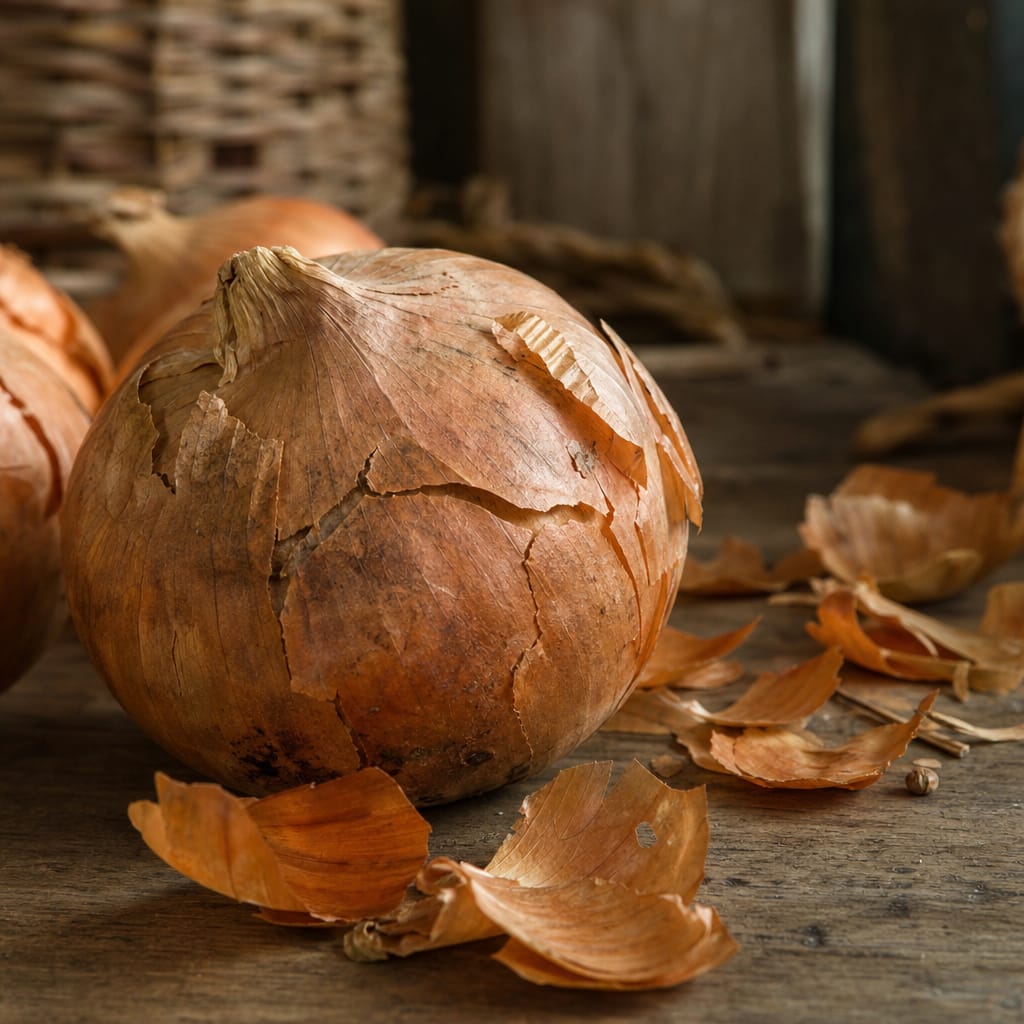
A farmworker in rural England might make a financial decision peeling an onion in mid-September before the damp sets in. He won't have realised he has made a decision, but if the outer skin is thick and hard and papery and cracks, then a hard winter is coming. And in rural England, a hard winter means that everything will certainly cost more until the following spring.
This wasn't mysticism. It was, in every practical sense, a commodity forecast.
Reading the Hedgerow Balance Sheet
Rural people had noticed the same patterns for generations, and there was something real in the way that plants and animals reacted to changes in atmospheric pressure, to the temperature of the soil, and to early cold snaps – all were reliable indications of what winter would bring, and they looked something like this:
- A heavy crop of holly berries – the tree was "stocking up" for the birds
- Thick, papery onion skins
- Pine cones opening wide by October
- A mast year, when oaks and beeches dropped far more acorns and beechnuts than usual
- Wasps disappearing earlier in the autumn than expected
Each one was the same message: prepare now, while the price is still low.
The Buying Window That Opened at Michaelmas
Michaelmas falls on 29th September. It’s the time of year when rents are settled and when you get paid for the harvest. Food is at its lowest price of the year. If signs were pointing to a hard winter, you wouldn’t hang on to cash and wait. You would exchange it for salted pork, dried peas, preserved butter or stored grain. These are things that will retain their value when everything else gets more expensive.
This is almost exactly how inflation hedging works: instead of comparing savings rates and looking at spreadsheets, you trade cash, which loses value when prices rise, for something real before the exchange rate goes against you. To see this same instinct at work on more current decisions, read How Old Should You Be Before Work Stops Owning You?, which unpacks when the balance between working and having actually shifts.
The Crowd-Sourced Futures Market
When farmers across parishes find a thick onion skin in September, they can compare it to the thick skins found in Dorset or to the thick skins being found in Lincolnshire. The farmer’s observations over the years of hedgerow produce in September give him considerably less data than the Bank of England has to go on when making inflation forecasts.
The methods developed by farmers centuries ago to watch hedgerows for signs of change in the seasons, to gather in their crops and predict change long in advance, are the same methods used by the many people watching for signs of inflation. The data available to a single farmer watching a Dorset hedgerow in late September would be considerably less than the data available to the Bank of England for inflation. But the methods the Bank developed from scratch, aggregate observation and early action, are the same ones farmers used in the fields for centuries.
Frequently asked questions
Does the folk prediction system actually hold up?
For what it was intended to do, most of the time yes. The signs weren’t predicting inflation as economists mean it. They were meant to forecast food price spikes specifically. Harsh winters were a reliable cause of such spikes and it was clear from the observable signs whether or not a harsh winter was on its way. The signs weren’t a general hedge, but they were reliable enough within their limited scope to be worth heeding in the many hungry winters of the centuries past.
What's the modern equivalent of stocking the larder before Michaelmas?
Convert cash into assets whose purchasing power will last through the period before prices rise, such as by purchasing durable goods in anticipation of a tariff, by overpaying a mortgage when your actual spending power is higher than the rate assumes, or moving cash savings into assets that keep pace with inflation rather than lag behind it. The same timing logic holds as for Michaelmas: act in the interval between the signal and the price spike.
Why did people stop reading these signs?
The global and industrial nature of the food supply means that a hard frost in Shropshire no longer means the shops will be empty by February. Food is able to be transported from anywhere in days, and the seasonal nature of wages has also decreased, blurring the clear "buying window" of Michaelmas. Although the sign for hard winter weather still works and is generally accurate, the price increases that it portends have largely been eroded.
Were the signs ever wrong?
Almost certainly, and this is basically a probabilistic system, not magic. A thick onion skin might suggest a likely outcome, but it is by no means a certainty. Country dwellers stockpiling for a mild winter are likely to find they have overstocked on salted pork – over-prepared, not wrong. But this surplus will keep. The cost to them of predicting wrong in this case is far lower than if they had predicted the other way and run out of money when grain doubles in price. An empty larder in January does not keep – salted pork, however, does.