
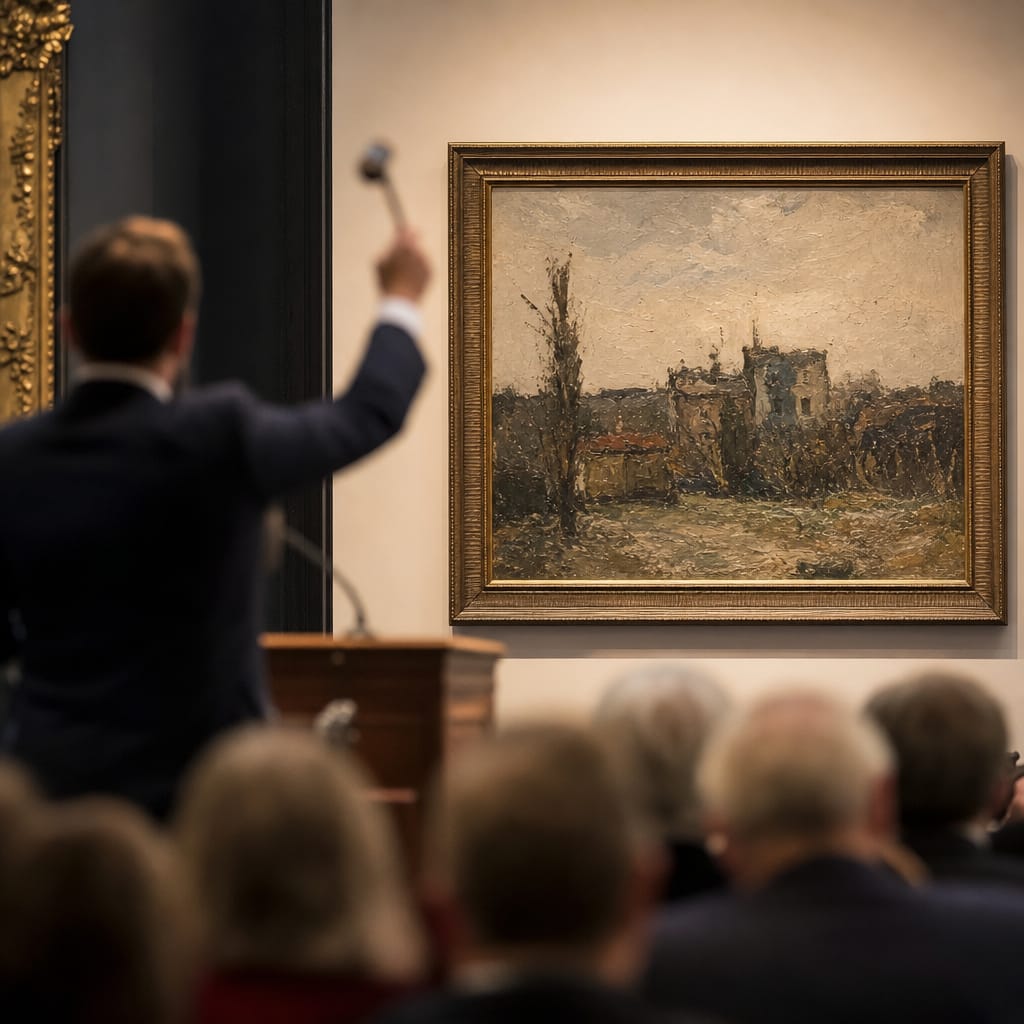
Imagine you sell a painting in 1975 for £200 (you need to pay the rent and the art dealer is keen). Thirty years later that canvas is sold at auction for £180,000. The hammer falls, someone opens a bottle of champagne and you – still alive, painting away, fairly broke – get nothing on the difference.
This was largely the situation for visual artists for the greater part of the twentieth century.
The Royalty Musicians Always Had (And Artists Didn't)
As musicians have for years realised, there is always a mechanism in place by which their work is followed as it leaves their hands and some of the value is sent back to them, whether that be played on radio, licensed for use in a film, or even sold on. Visual artists have no equivalent: their work is sold once and then belongs to the buyer for all time. Typically artists are left watching as the value of their work soars, doubling and then doubling again.
The Artist’s Resale Right (ARR) introduced into the UK legislation in 2006 ensures that artists gain when their qualifying work of art is resold for £1,000 or more (the threshold was €1,000 before April 2024) either through an auction house or commercial dealer. The artist receives a percentage of the resale price of the art work (not the profit) – this is set out on a sliding scale: 4% on the first band, then 0.25% on the top band, capped at €12,500 per sale.
DACS Does the Chasing
As a painter, you don’t have to deal with the details of your sales when you are selling through a gallery. DACS (Design and Artists Copyright Society), the collecting society for visual artists, deals with the transactions and ensures that the artist receives the appropriate royalties for qualifying sales. Should the artist have passed away, the right to receive royalties for his/her work shall belong to his/her estate and continue to be paid out for 70 years after the artist’s death. This also applies to copyright for the work. Thus a painter who died in 1980 is still paying out to his/her heirs. More on this in How Old Should You Be Before Work Stops Owning You?
The Admission Hidden in an Auction Catalogue
What is interesting about ARR is that it is based on a number of quiet concessions. Most importantly, art accumulates in value over time in a way and to an extent that the sale price almost never anticipates. Thus the £200 painting sold for £180,000 in 2005 gained most of its increased value after the artist’s sale, when they had long since relinquished control of it. Whoever made it gets something on the sale, whether they know about it or not.
Frequently asked questions
Does ARR apply to every piece of art sold at auction?
Not quite. This tax will only apply to original or limited-edition works of graphic or plastic art (painting, drawing, engraving, sculpture, ceramics, photography). Prints reproduced in large quantities will be excluded. The sale must go through a recognised art market professional: an auction house, art dealer or art gallery. No tax will be levied on sales conducted directly between two individuals.
What if the artist never registered with DACS?
DACS will still try to find them. They track the market independently and hold unclaimed funds for artists who haven't yet registered. Registering just makes it easier to receive money you're already legally entitled to – it doesn't create the entitlement.
Can a dealer ask an artist to give up the right as a condition of representation?
No, and this is rather the point. ARR is inalienable – you can't waive it, sell it, or sign it away. It attaches to the work automatically once the work qualifies, and any contract clause that tried to remove it would simply be unenforceable.
Does the resale have to be profitable for ARR to apply?
Not at all. If a work sells for €2,000 and the current seller originally paid €20,000 for it, ARR still applies to the €2,000 sale price. The artist receives their percentage regardless of whether the person selling it is making or losing money on the deal.