

About 13.8 billion years ago, something very small became something incomprehensibly large in a fraction of a second. Physicists call it cosmic inflation – the early universe ballooning outward faster than the speed of light, space itself stretching in every direction at once. It's one of the most vertiginous ideas in all of science. And the word they chose for it was a perfectly sensible one. Things were expanding. Prices inflate a balloon. Inflation.
Then Economists Pinched the Word
Then, somewhere along the way, economists pinched the term.
It's one of those quiet acts of conceptual theft that nobody really notices, but it does mean that the same word now covers both the birth of the universe and the fact that your weekly shop costs four quid more than it did last autumn. The physics version describes matter racing outward through space. The economic version describes the purchasing power of your money quietly shrinking – which feels similar if you've recently looked at a utility bill.
What Both Versions Share
What both versions share is a simple, slightly cruel mechanic: once it starts, it feeds itself. In the early universe, inflation drove expansion which drove more expansion. In an economy, rising prices push workers to demand higher wages, which pushes up the cost of producing things, which pushes prices higher again. The spiral isn't just a metaphor borrowed from astrophysics – it genuinely works the same way. Something small gets away from you very quickly.
Where It Gets Concrete
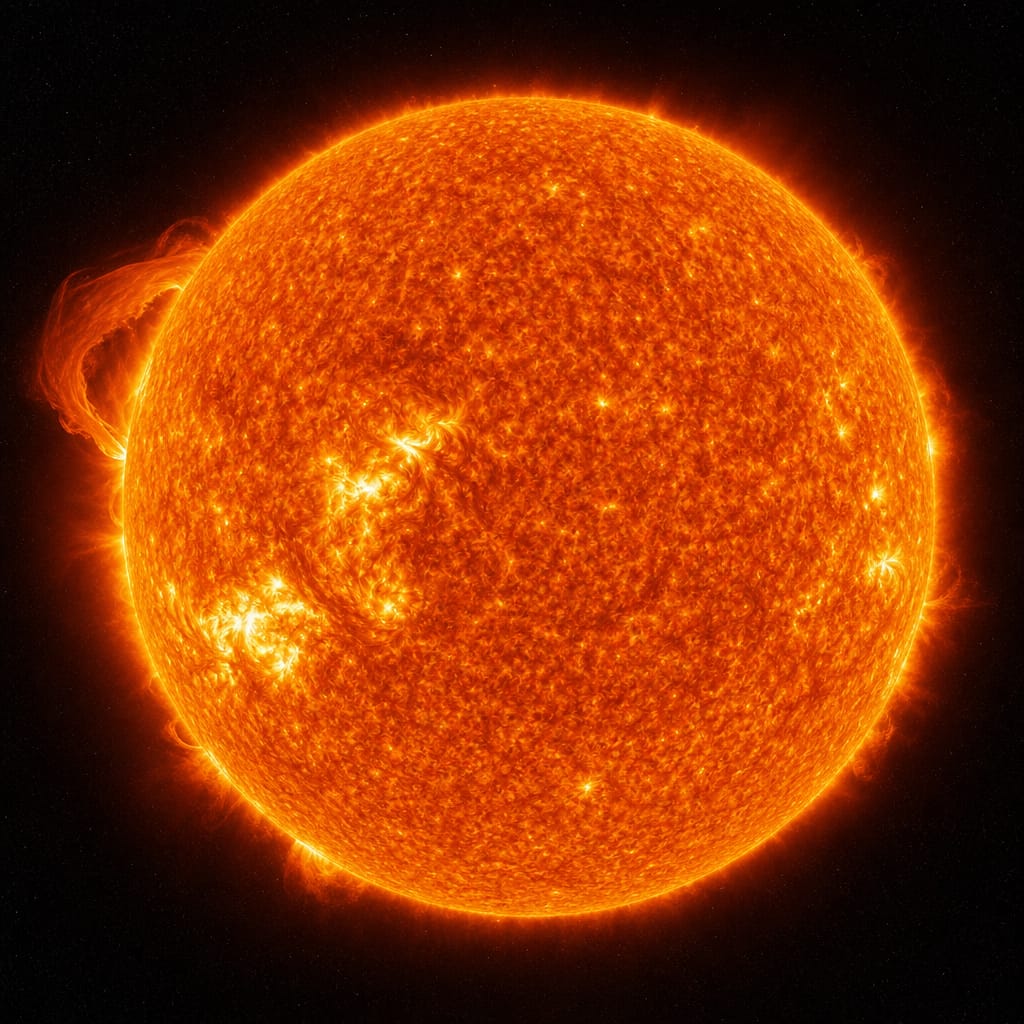
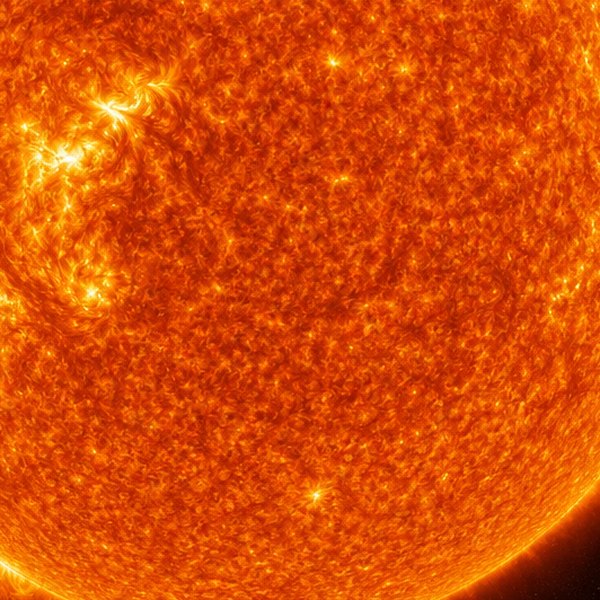
Here's where it gets unexpectedly concrete, though. The actual sun – the one outside, that enormous ball of plasma your doctor keeps telling you not to stare at – still has a hand in the economic kind of inflation. Just through a longer chain of events. Solar activity affects energy prices. Geomagnetic storms, which are more frequent and more severe around solar maximum (the peak of the sun's roughly eleven-year activity cycle, and we're near one now), can disrupt satellite systems and power grids, nudging energy costs upward. They also interfere with the radio navigation systems that airlines depend on, occasionally rerouting flights and burning more fuel. If you've booked a holiday this year and winced at the airfare, part of that cost – buried deep inside it – has a solar origin.
The original astronomers who coined "inflation" in the cosmic sense weren't thinking about any of this, obviously. They were trying to describe something genuinely difficult to imagine: expansion without a centre, no single point that everything is moving away from, just everything moving away from everything else all at once. Which, come to think of it, is also a fairly good description of how it feels when prices rise across an entire economy simultaneously. Your money isn't losing value in any one specific place. It's losing value everywhere, relative to everything, all at once.
The sun started it. In more ways than one.
Questions this raises
- Who first used inflation to describe rising prices?
- Is cosmic inflation still accepted by physicists today?
- Does the balloon analogy actually hold up scientifically?
- Why do economists borrow so many words from science?