
Somewhere in your wardrobe right now there is almost certainly something purple. A jumper, a scarf, half a pair of socks. You probably did not think much when you bought it – a few quid, a passing fancy, done. For about fifteen centuries, though, that decision would have been made for you. And if you'd made it anyway, a magistrate would have had something to say about it.
Sumptuary Laws
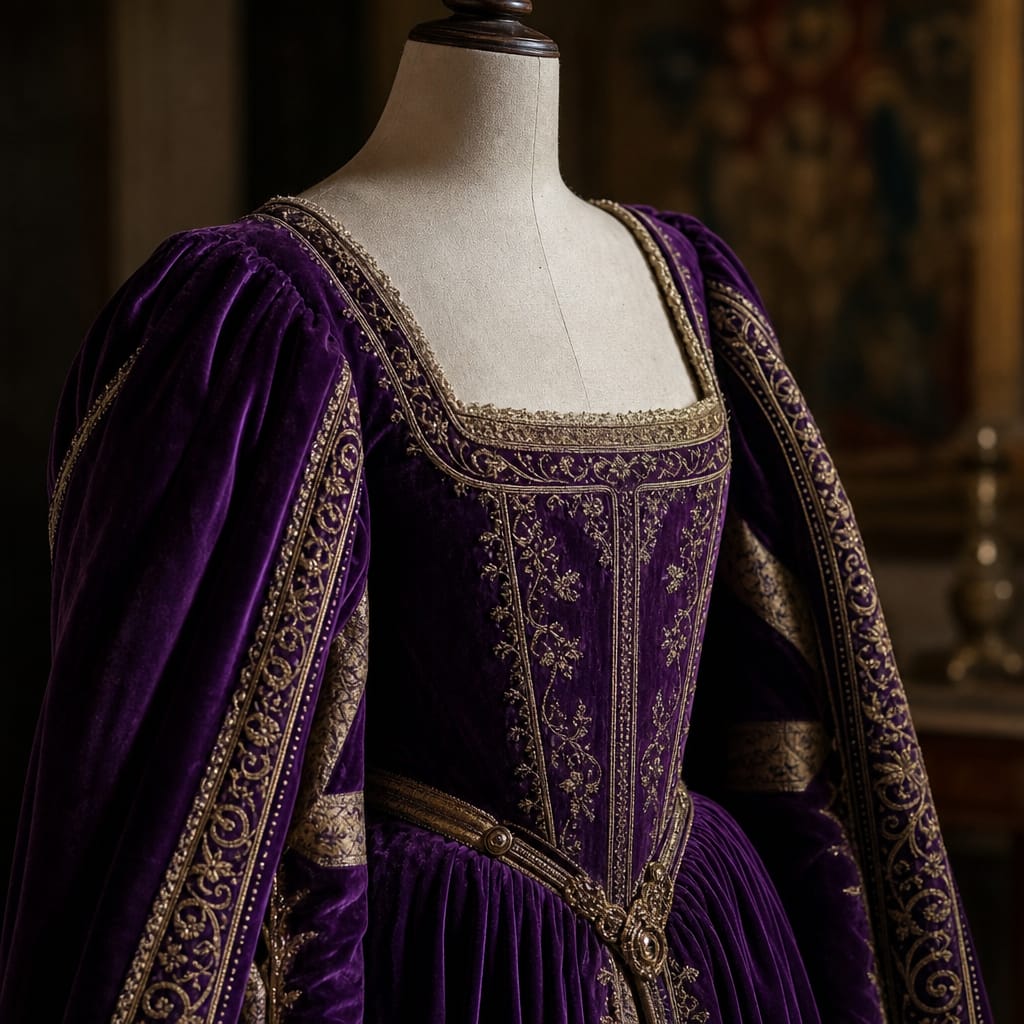
Sumptuary laws were the dress codes of the pre-modern world, and they were not suggestions. From ancient Rome right through to Tudor England, governments issued precise, almost comically specific rules about who was allowed to wear what colour. Crimson velvet: royalty only. Certain furs: the nobility. Silk in particular shades: earls and above. A merchant who made good money and decided to celebrate by dressing his wife in scarlet could find himself hauled before a court. The colour on your back was a legal declaration of rank, and if your rank did not match your outfit, you were lying in public.
England’s version was the 1363 Statute of Apparel, which set out dress by rank in remarkable detail: which furs a merchant or craftsman could wear, how much silk was allowed at each level, and what the cloth itself was allowed to cost. At the bottom of the scale, labourers and servants were largely confined to cheap, undyed or locally dyed wool. Further east the rules were tighter still. In the Byzantine Empire the finest purple was restricted by law to the imperial household, and the phrase “born in the purple” comes from the Porphyra, a chamber of the palace in Constantinople lined with purple porphyry stone, where the children of reigning emperors were born.
The laws never worked as well as their authors hoped. Wealthy merchants pushed at the edges, officials could be persuaded to look the other way, and new fabrics and dyes kept arriving that the old categories did not cover. Over time, styles that had begun at court filtered down the social scale until nobody thought of them as privileges any more.

What made Tyrian purple so expensive to produce?
The reason this was enforceable at all comes down to dye. Purple did not come out of a vat of cheap chemicals; it came from a sea snail called murex, and you needed thousands of the things to colour a single garment. Crimson meant kermes insects, gathered by hand across the Mediterranean. Saffron yellow required the dried stamens of crocus flowers – still around 150,000 blooms to produce a single kilogram. These colours were not just beautiful. They were materially scarce in a way that made them worth policing, because wearing them was effectively walking around in liquid money.
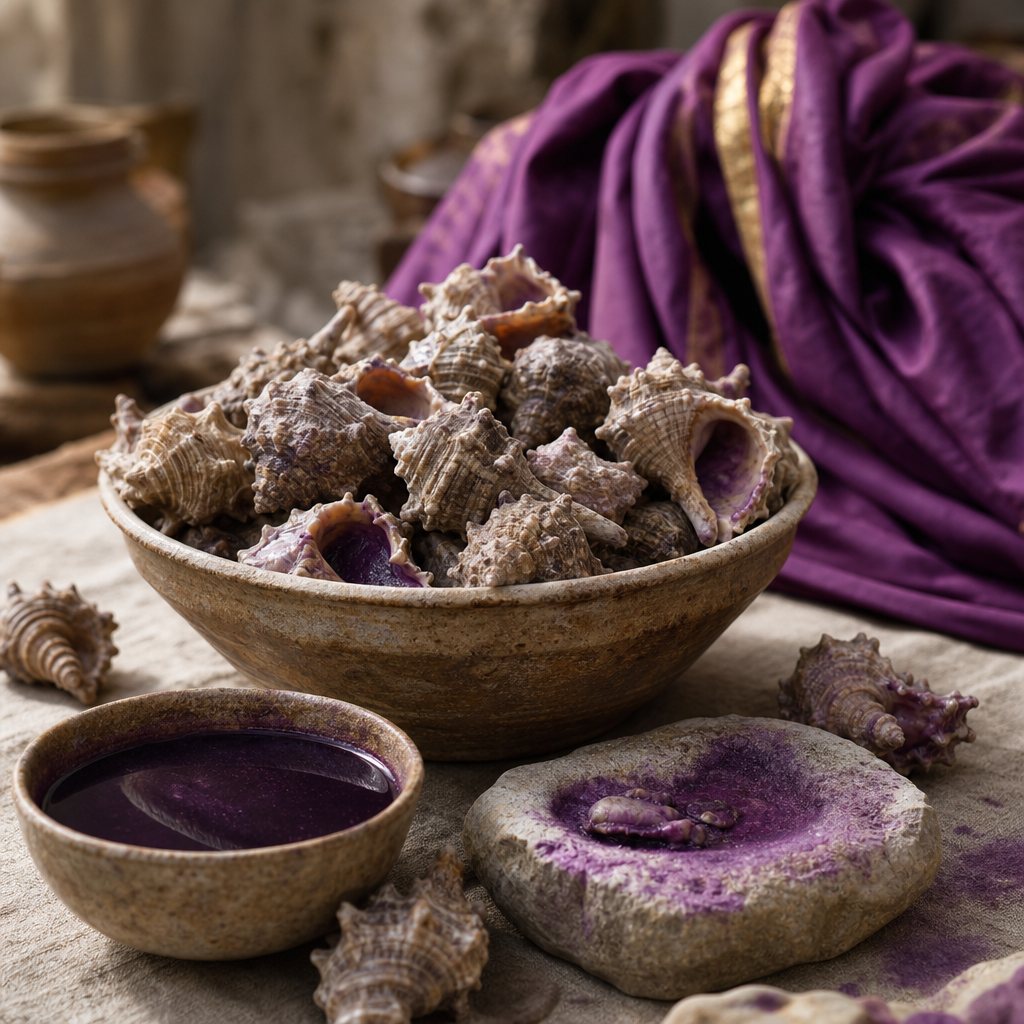
The dye itself has a long and smelly history. The Phoenicians of Tyre, on the coast of what is now Lebanon, made it famous, which is why it is still called Tyrian purple. The snails used were mainly species such as Bolinus brandaris, and the colour comes from a gland that releases a pale fluid which only turns purple as it reacts with air and light. Producing it meant leaving huge quantities of shellfish to rot, and the stench was notorious. Estimates of how many snails it took vary so widely between accounts that any precise figure is best treated with caution; what they agree on is that a single garment used up a great many of them, and that is what made the colour so expensive.
When the Roman Empire faded, purple did not lose its standing. The Church took up the imperial colour, and violet and purple are still part of church dress and the church calendar today, worn by bishops and used in the seasons of Advent and Lent.
Ultramarine’s Own Category
Ultramarine blue sits in its own extraordinary category here. Ground from lapis lazuli mined in Afghanistan and shipped across the known world, it was for centuries more expensive by weight than gold. Painters in Renaissance Italy had to account for every gram of it in their contracts, and some were left out of pocket by it. The Church reserved it almost exclusively for the Virgin Mary's robes – both as an expression of her status and, frankly, because no one else could afford it. For more on exactly how ruinous it was, read The Paint That Cost More Than the Portrait.
When did purple dye become cheap enough for everyone?
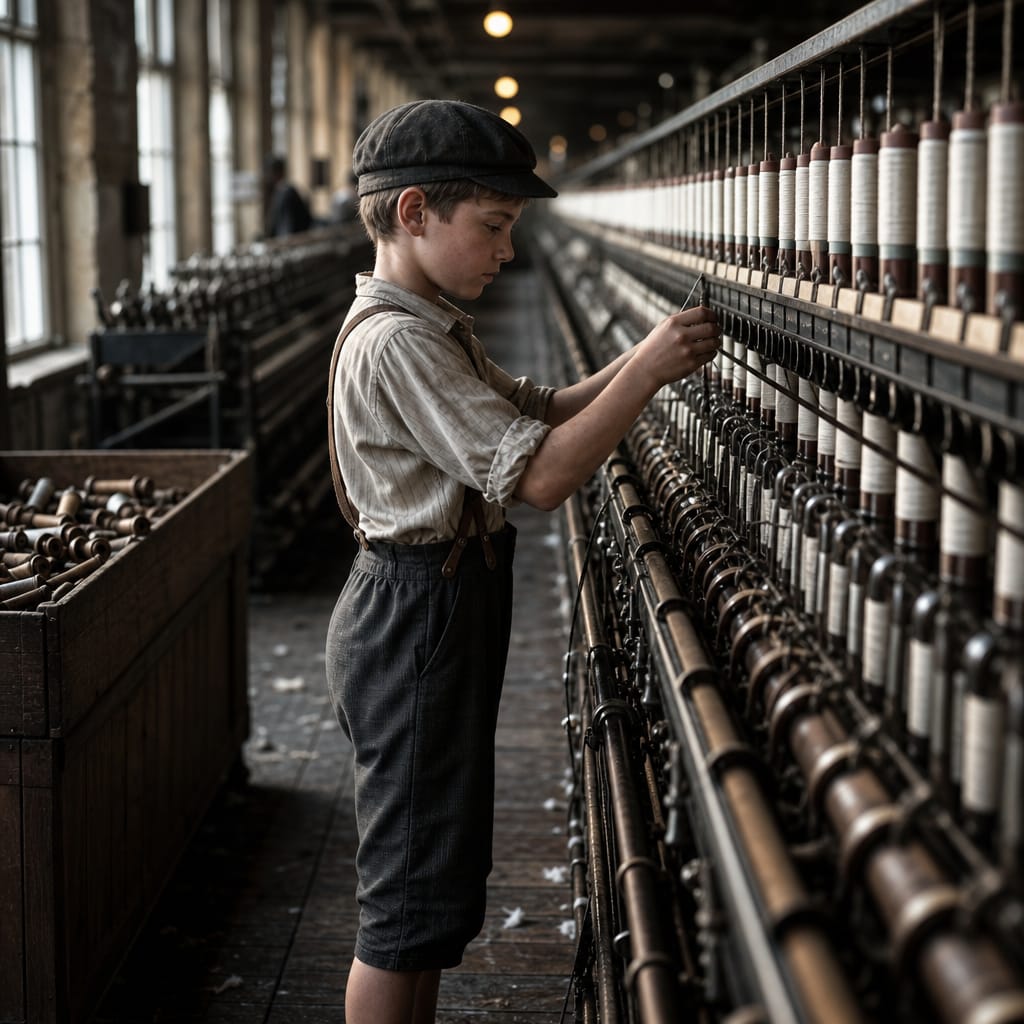
Then the nineteenth century arrived and smashed the whole system. In 1856, an eighteen-year-old chemistry student called William Perkin was trying to synthesise quinine in his home laboratory. He accidentally produced a vivid purple dye from coal tar. He called it mauveine. Within a decade, synthetic dyes were flooding through the textile industry, and colours that had once been the preserve of emperors were being printed onto factory cotton by the mile.
The sumptuary laws had already faded out by then – England repealed its clothing statutes in 1604 – but the dye revolution finished what law had started. Colour stopped being a ledger of power and became purely personal. Which is why you can pull on a purple sock on a Tuesday morning without a second thought, and absolutely no one is going to haul you before a magistrate for it.
The freedom on the charity-shop rail
It is worth remembering all this the next time you are in a charity shop. You pull something off the rail and, if it fits and you can afford it, you wear it, with nobody asking about your rank or your guild. For most of recorded history that simple freedom would have been unthinkable, and it took centuries of small rule-breaking to win.
Questions this raises
- Who was allowed to wear purple in Tudor England?
- Does any country still enforce dress laws today?