


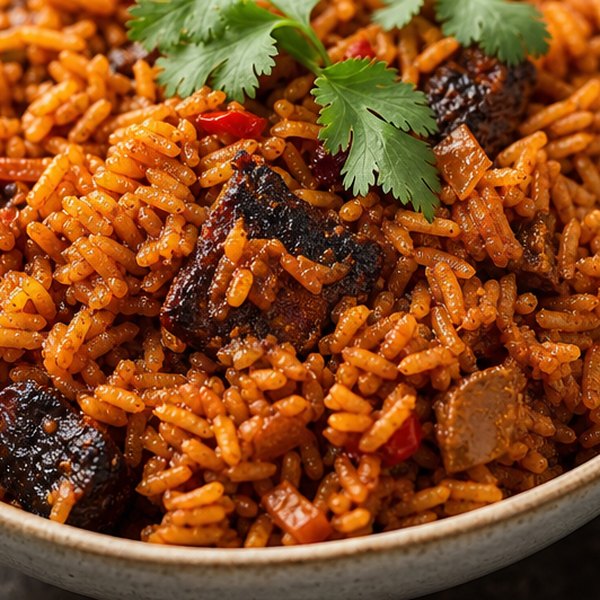
Imagine you're handed a recipe for a Nigerian-Mexican fusion dish – jollof rice spiked with chipotle, say, or a suya-spiced taco with fermented locust beans. You read it carefully. You read it again. You could probably describe it to someone. But sit you down in an actual kitchen and ask you to cook it, and something quietly catastrophic happens: you can't. The sequence dissolves. The quantities vanish. The smell you imagined bears no relation to what's actually in the pan.
That isn't a memory failure. That is memory working exactly as designed.
The Brain Does Not Store Files
The brain doesn't store facts the way a hard drive stores files. It stores the experience of arriving at something – the effort, the wrong turn, the moment of clicking. When you read a recipe passively, nothing much gets laid down. But when you burn the onions, improvise, taste, adjust, and somehow produce something edible? That experience gets encoded properly. The dish becomes something you know rather than something you've seen.
This is what neuroscientists and educational psychologists mean when they talk about the "testing effect" – and it is one of the more inconvenient findings in the whole of education research, because it completely undermines how most schools are run. Rereading your notes feels productive. It produces a warm, familiar glow, a sense that the material is going in. What it actually produces is fluency at recognising something you've already seen, which is a very different thing from being able to retrieve it independently when you need it.
Why does re-reading notes feel like learning but isn’t?
Retrieval practice – actively pulling a memory out rather than passively looking at it – forces the brain to reconstruct the pathway to the information. That reconstruction is what strengthens the memory trace. Every time you successfully recall something, the next recall becomes slightly easier. Every time you just read it again, you are essentially cooking from the recipe card in your head without ever touching a pan.
Spaced Repetition
Spaced repetition works on the same logic. Leave a gap before you revisit something and your brain has to work a little harder to find it again. That effort is the point – the struggle is not a sign that you haven't learned it; it is the learning. Cram it all the night before an exam, pass, and then find – as almost everyone does – that three weeks later it has completely gone. The knowledge was never stored; you just got briefly very good at recognising it under pressure.
Why Teaching to the Test Is a Gamble
Which is why "teaching to the test" is such a strange gamble to keep taking. It optimises for recognition over retrieval, for reading the recipe rather than cooking the dish.
A Nigerian-Mexican fusion menu like this one is a decent illustration. You could study the flavour logic of that cuisine for an afternoon and feel genuinely informed. But actual understanding – the kind you could build on, adapt, and use – only arrives when you attempt the thing and discover where your gaps really are.
The exam is the beginning, not the end. The kitchen is where the learning happens.
Questions this raises
- How many attempts does it take before a skill sticks?
- Does writing something by hand help you remember it?
- Can watching videos ever replace actually doing the thing?