
Nobody sends you a welcome email. There's no cancellation page, no 30-day free trial, no cheerful notification that your payment has processed. But the moment you drive off a forecourt, you've quietly enrolled in about a dozen separate subscriptions that run simultaneously, all the time, whether the car moves or not.
The obvious ones are fuel and insurance, so let's skip those and get to the interesting machinery underneath.
Start With Your Tyres
Start with your tyres. A tyre isn't just rubber – it's a very precisely engineered compound that degrades in a curve. Drive enthusiastically and that curve steepens fast. The front tyres on a front-wheel-drive car steer AND pull the car forward, which is why they typically wear about twice as fast as the rears. Swap them front-to-back every six thousand miles or so and you flatten the curve a bit. Ignore that advice and you're essentially paying double subscription rate on the fronts while the rears loaf about doing almost nothing.
The Catalytic Converter
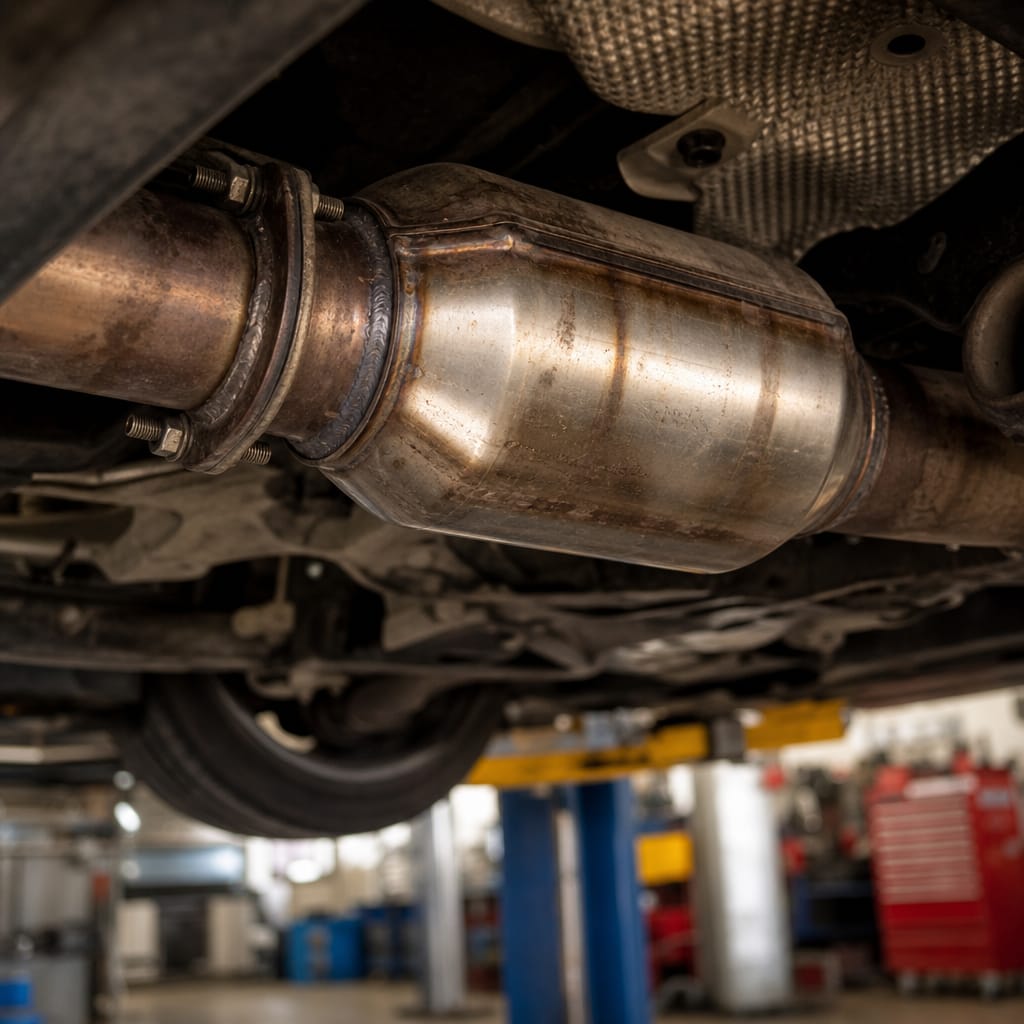
Then there's the catalytic converter. This is the device that turns the genuinely horrible stuff in your exhaust into merely bad stuff, and it does it using platinum, palladium and rhodium – three metals that are worth an embarrassing amount of money. Which is also why cat theft is a genuine and growing problem. The converter works by running exhaust gases over this precious metal mesh at temperatures above 400 degrees Celsius. Cold starts are its enemy: the cat does almost nothing useful during the first mile or two, which is when the engine is running rich (extra fuel, less efficient combustion) and the metals are still warming up. Every short trip is essentially you paying full fuel price for partial burn quality, and it ages the cat faster too.
The Premium Unleaded Question
The premium unleaded question deserves a minute. Most modern petrol engines have a knock sensor – a microphone, essentially, listening for the tiny pre-detonation pings that happen when cheaper fuel ignites before the spark plug tells it to. When it hears one, it retards the ignition timing to compensate, which is clever, but which also costs you a small percentage of power and efficiency. High-octane fuel lets the engine run its optimal timing without flinching. Whether the efficiency gain covers the price premium depends almost entirely on your specific engine and how hard you use it. The car knows. Most drivers don't.
Brake Pads
Brake pads are another running subscription that very few people track consciously. Every time you slow from 60mph, you are converting kinetic energy into heat via friction through about 0.1mm of pad material. Drive a hilly route daily and you'll pay that subscription faster than someone on a flat commute. For a breakdown of how running costs actually stack up against one another, check inflationsaving.co.uk.
The uncomfortable truth is that a car is just a machine purpose-built to convert money into entropy at a steady, predictable rate. The money leaves in twelve different queues at once. Most drivers only ever look at the fuel queue, which is a bit like watching one tap while eleven others quietly drip.
Questions this raises
- How often should car tyres actually be replaced?
- Which running costs do drivers most underestimate?
- Does depreciation cost more than fuel?
- Is main dealer servicing worth the extra money?