


The Bank of England sets its base rate – 3.75% in October 2026 – and somewhere across London a journalist types "savers to benefit" into a headline, and millions of people with ISAs and easy-access accounts nod and think: good, more money for me. Then they check their balance a month later and find it still says 1.2%, and they feel vaguely cheated but can't quite work out why.
Here is why.
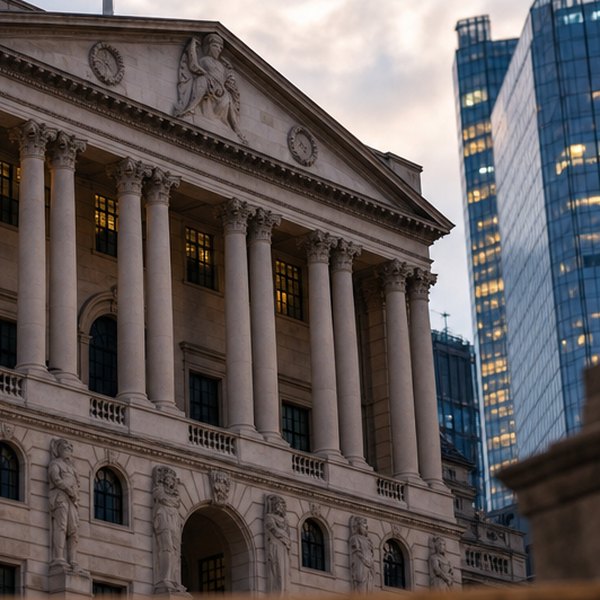
The Base Rate Is Not a Savings Rate
The base rate is not a savings rate. It is the rate at which the Bank of England lends money to commercial banks overnight – a wholesale price, a number that exists between institutions, not between a bank and you. Not between a bank and the person who put their redundancy payment somewhere safe in 2019 and hasn't really looked since. The moment that rate leaves Threadneedle Street, it enters a marketplace where a lot of very motivated people have a strong interest in it arriving at your account a good deal smaller.
Why do banks pass on rate rises so slowly?
Banks borrow from the Bank of England, yes, but they also borrow from each other, from bond markets, and from depositors – which is you. When the base rate rises, a bank has several options. It can pass the increase on to savers to attract deposits. It can quietly not do that, because most savers won't move their money even if the rate is rubbish, and it costs money to administer active savers and send them letters. It can split the difference and offer something that sounds plausible – 1.8%, say – knowing that most people will accept it. The decision is not made charitably.
Which savings accounts actually track the base rate?
This is where the gap between 1.2% and 4.9% comes from. Both accounts exist in the same week, under the same base rate. The 4.9% is almost certainly from a smaller bank, a building society, or an online provider that genuinely needs your deposits to fund its lending, so it has to compete. The 1.2% is almost certainly from a large high-street bank sitting on a mountain of existing deposits, which gives it no particular reason to try harder. No rules broken. Just no incentive.
There is also the question of what kind of account you are looking at. Fixed-rate bonds track expected future rates, not current ones – so when a base rate cut looks likely, the best fixed rates quietly shrink before the cut actually arrives, because the market has already priced it in. Easy-access accounts move more slowly in both directions: sluggish when rates rise, surprisingly brisk when rates fall. Nobody at the bank is embarrassed about this asymmetry.
The Practical Upshot
The practical upshot is that the base rate tells you roughly what the best available rate should be in the right kind of account with the right kind of provider, but it tells you almost nothing about what your current account is doing with your money. If you want to understand the gap between those two things, the same principle turns up in how everyday spending habits quietly drain value in ways that are just as easy to miss – The Subscription Service You Signed Up For When You Bought a Car is a good example.
The base rate is a starting pistol. Whether the race reaches you at all is a different matter entirely.
Questions this raises
- How quickly do mortgage rates follow the base rate?
- Can you make your bank improve your savings rate?