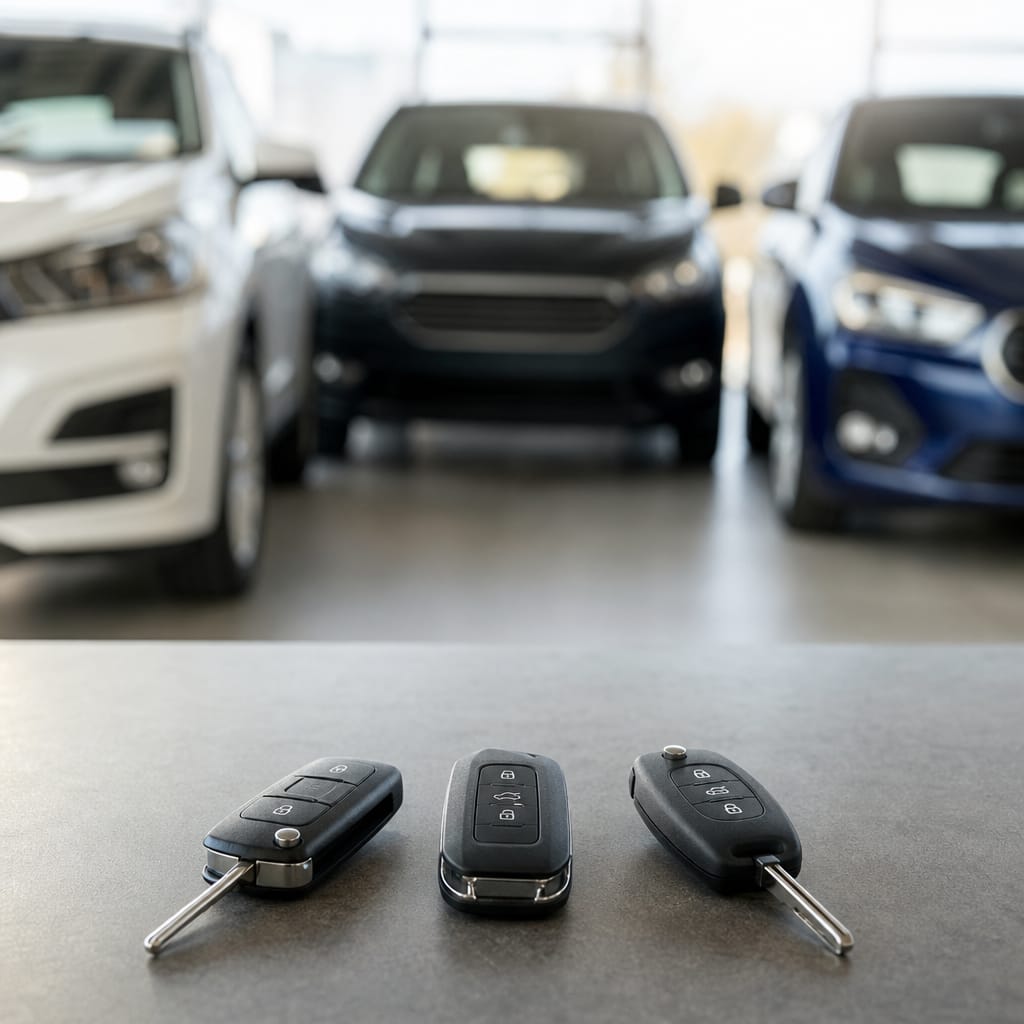


There's a small irony in the name "automatic". It implies ease, passivity, something that just sort of… happens. And from where you're sitting, it does. Left foot idle, right foot doing the occasional gentle prod, both hands loosely on the wheel while you argue with the radio. But behind that dashboard, something is absolutely losing its mind on your behalf.
What the Gearbox Is Actually Doing
The automatic gearbox – a proper traditional torque-converter unit, anyway – is sampling your driving somewhere in the region of dozens of times per second. Throttle position, road speed, engine load, gradient, how fast your right foot is descending toward the floor. It reads all of these simultaneously and makes gear decisions in a timeframe that conscious thought couldn't get near. By the time your brain has finished the sentence "I should probably accelerate", the box has already decided which gear you'll do it in, shifted into it, and started wondering what you might want next.
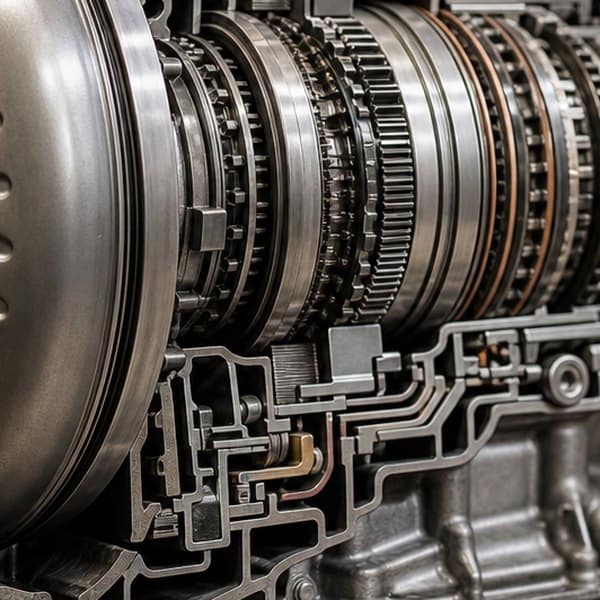
And it is genuinely wondering. A sharp, fast depression of the accelerator – say, pulling out onto a dual carriageway – reads completely differently to a slow, gradual squeeze while you're cruising at 60. The first one triggers a kickdown, punting the transmission two gears lower to give you a surge of torque. The second is interpreted as "they're happy enough, just ease us up a gear when the revs permit". Same driver, same road, two completely different responses, because the box is not just measuring speed. It's measuring intent.
Where “Automatic” Misleads
This is where "automatic" becomes genuinely misleading. The word suggests something switched off. The machine is doing the opposite: it's running a constant three-way negotiation between what the engine wants to do (keep the revs in a happy band), what the wheels need (enough torque to deal with whatever's actually happening out there), and what the driver appears to be about to do (which it's guessing from throttle pressure, because you haven't told it anything). It is, in a modest mechanical sense, predicting the future.
CVTs Go Further Still
Newer continuously variable transmissions (CVTs) take this even further, ditching fixed gear ratios entirely in favour of a pair of variable-width pulleys and a steel belt. There's no "second gear" or "fourth gear" to select – just an infinite sliding scale of ratios adjusted to keep the engine humming at exactly the right speed for the conditions. Efficient? Extremely. Exciting? That's the deal you've accepted.
The Dual-Clutch Showoff
The dual-clutch gearbox, meanwhile, is the showoff of the family: two separate clutch packs, one for odd gears, one for even, so that the next gear is always pre-selected and waiting. Shifts happen in milliseconds – less a gearbox than a gambler with very fast hands, always holding the card it expects you'll need.
So next time the car slots seamlessly down a gear as you swing out to overtake, spare a thought for the frantic calculation that just happened without you. You felt nothing. That was rather the point.
Questions this raises
- How often should automatic gearbox fluid be changed?
- Does a DSG work the same way as a torque converter?
- Why do automatics hesitate before changing down?
- Is an automatic dearer to repair than a manual?